What Bollywood Movie Genre Is Your Zodiac Sign?

What Bollywood Movie Genre Is Your Zodiac Sign?

The Signs as Bollywood Movies

13 zodiac signs & zodiac signs personality

1. Aries

An Aries woman is zestful, lively & has a creative side to her. She also (almost) always stays optimistic and has a spellbinding personality. While she loves independence, she might end up making absurd decisions due to her impetuousness, at times.

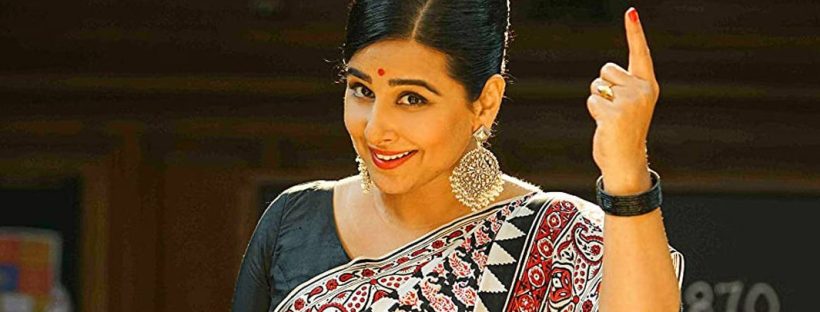
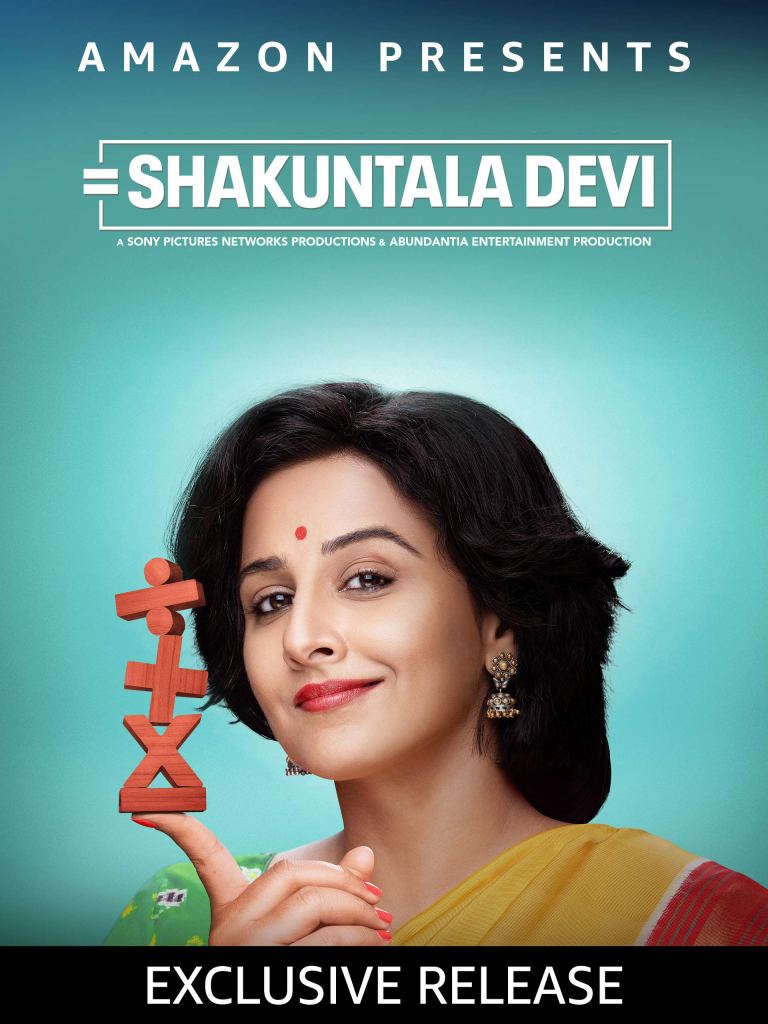
A perfect movie for an Aries woman therefore would be Shakuntala Devi. This Vidya Balan starrer eponymous biopic revolves around the ‘personal’ life of the world-famous mathematician also known as ‘the human computer’. She knew exactly how to live life without regrets but is freedom really equivalent to happiness?

Shakuntala Devi Movie

2. Leo:

Saying that Leo women are self-loving & confident wouldn’t be wrong. They have the ability to capture attention of everyone when they enter the room. Not only do they have a strong character, they have the biggest heart. But, Leos can be stubborn & one must learn to deal with this side to stay in their good books.

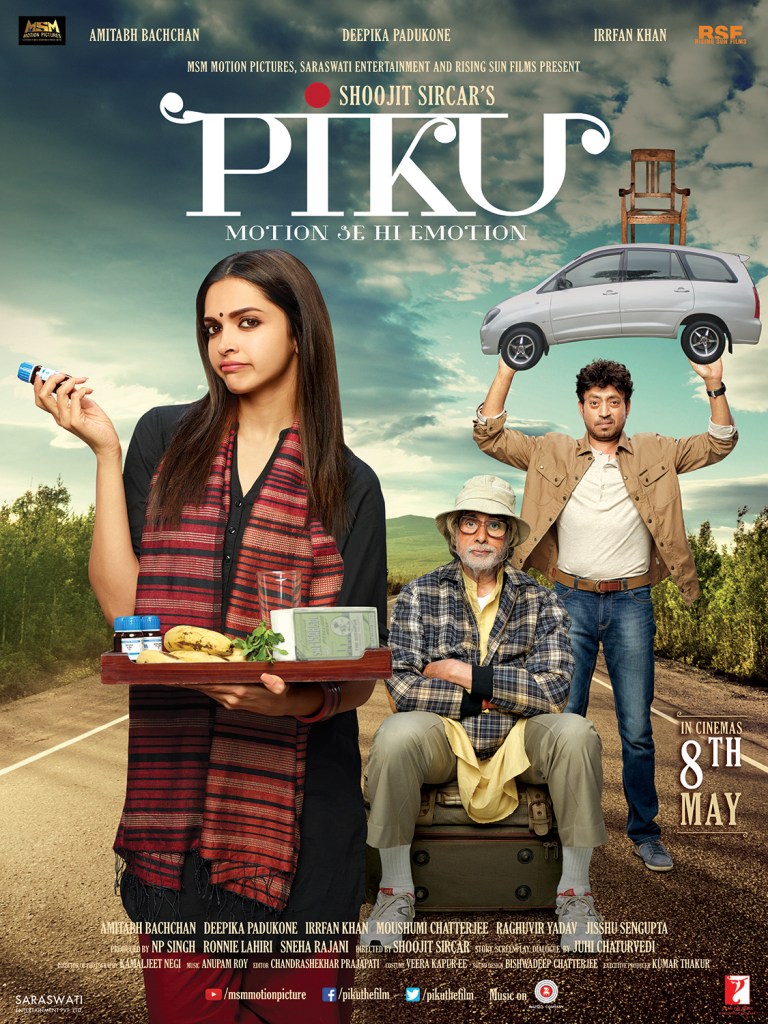
The Bollywood movie that immediately comes up in my mind when talking about Leo women is the Deepika Padukone starrer Piku. She’s independent, poised & determined. This light-hearted dramedy is bound to get you lost in Piku’s world & her endless trivial daily problems, and yet make you fall in love with her character & her story!

Deepika Padukone Piku Movie

3. Cancer:

If I have to describe a cancer woman in three words, they would be: considerate, (too) sensitive and kind. The ‘perfect wife’ or ‘homemaker’, as our society would call her as she always puts her family before everything else. We all secretly wish to have a Cancerian in our lives!

What can be a better movie than Sridevi’s English Vinglish for our Cancer woman who can go to any extent for her family and is just as warm-hearted as Sashi – a character that won’t let the smile disappear from your face for 2 h 14 m!

English Vinglish Movie

4. Pisces:

Pisces women are emotional yet ambitious beings. They must be commended for their patience level and how they turn a blind eye to others’ mistakes. Their forgiving nature is what makes them a bigger person! Nonetheless, while dreaming big is a positive trait of Pisceans, their aspirations often turn into disappointments when they face the real world.

Gunjan Saxena: The Kargil Girl (with tagline ‘larkiyan pilot nahi banti’) is a perfect example of a go-getting Pisces woman who can achieve whatever she sets her mind to, despite the obstacles that come in her way! Saxena, the first female IAF pilot, is a true inspiration for all the young women!

5. Scorpio:

If you ever come across a Scorpio woman, know that you will immediately form a deeper, more meaningful bond with her. Also, she will put her blood & sweat into everything she will do & is equally demanding from you. So make sure to live up to her expectations!

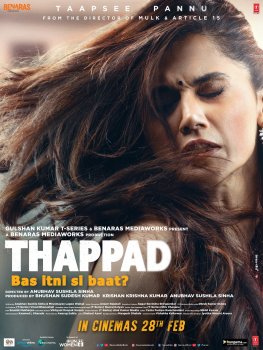
The 2020 movie, Thappad (‘bas itni si baat?’), starring the versatile Taapsee Pannu, is the weekend movie for Scorpio females. Amrita devoted her entire life to her sasural and husband but had it enough & gave up on them after being publicly slapped by her husband, once. I love the dialogue ‘just a slap par maar nahi sakta’ from the movie – so powerful and sums up why we must learn to raise our voices or take stand against any sort of domestic violence, regardless of its magnitude!

Thappad Movie

6. Tauras:

We lowkey want Taurus women to teach us how to choose the right person commit to. Her super powers include seeing right through a person & greeting troubles with a smile. She might sometimes lose her cool but mark my words; she will prove to be the most sincere & trustworthy person you’ll ever come across.

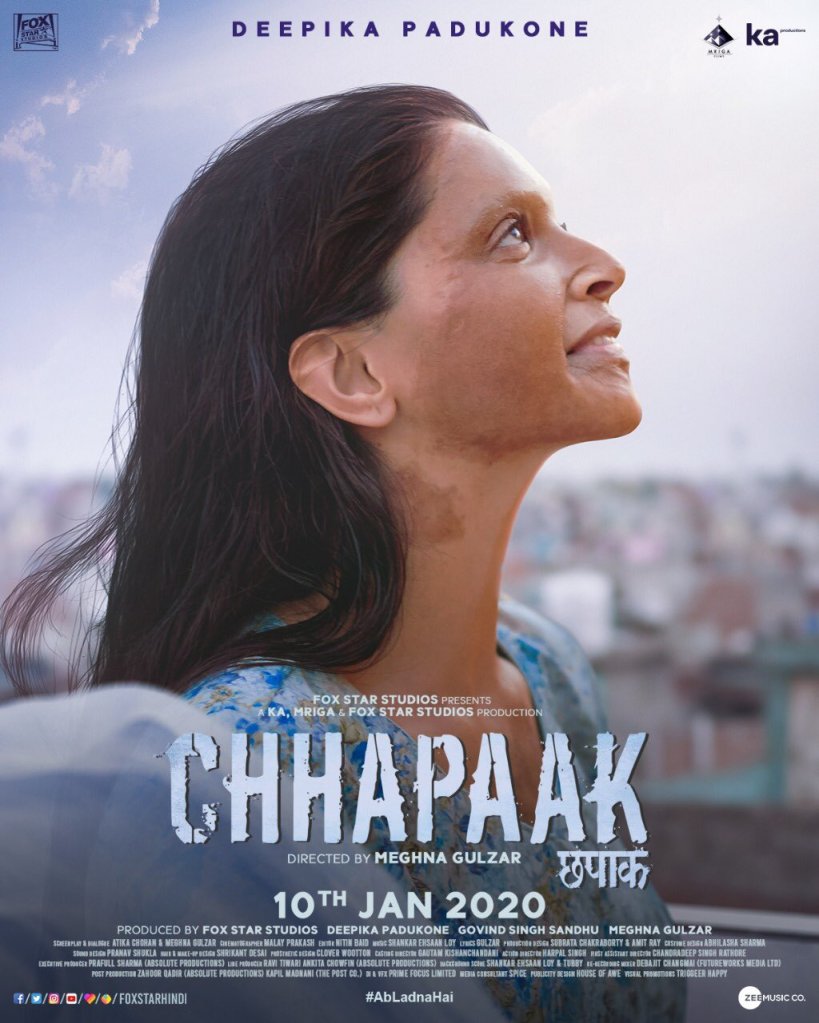
The movie ideal for a Tauras would be Chhapaak, based on the life story of an acid attack survivor Laxmi Agarwal. Despite being a victim of this monstrous crime, we see Malti, our protagonist grow as a strong-minded young woman. She laughs, fights & thrives – everything the attacker could never imagine!

Chhapaak

7. Sagittarius:

It shouldn’t come as a surprise that Sagittarians are adventurers! They do not worry about the future & live in the moment. A Sagittarius woman will always keep you entertained with her wittiness and spur-of-the-moment decisions. Next time you make friends, ensure it’s a Sagi!

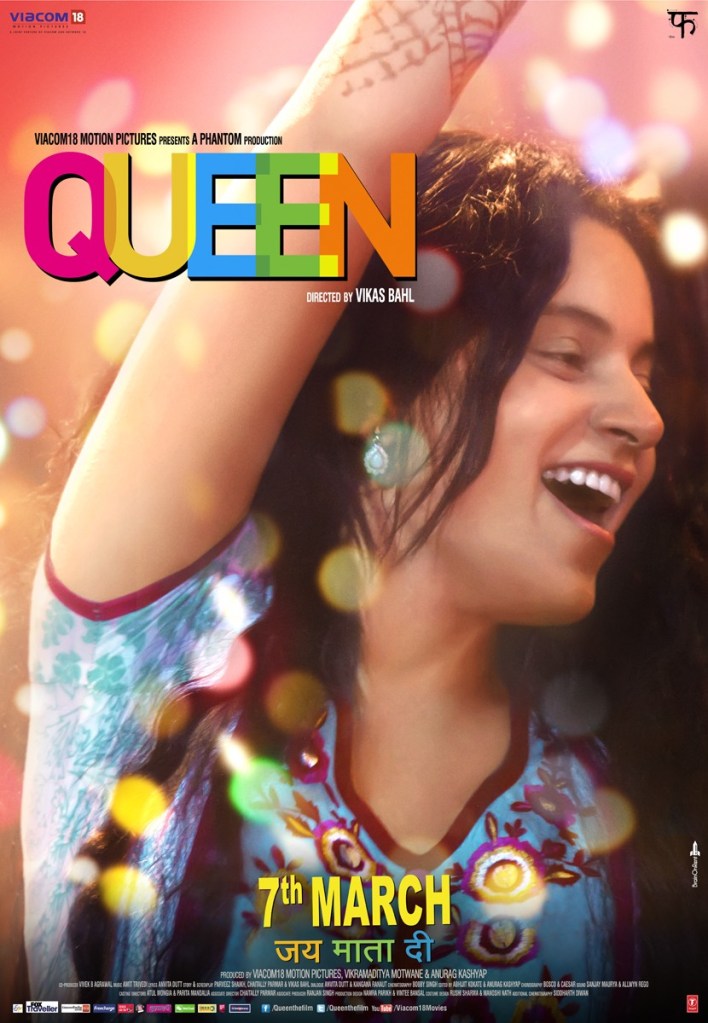
Don’t these traits remind you of the daring Rani from Queen? Because sure does to me! Free-spirited, always up for an escapade & having no difficulty making friends whatsoever!

Queen Movie

8. Gemini:

Intelligence > Physical appearance. If you want to impress a Gemini woman, you have to connect to and challenge her mentally. She is proud of who she is and will convince you to love yourself too. A true Geminian knows how to play tactically and will defeat you with smartness – better do your homework before arguing with them!

If you’re a Gemini, then the movie, Kahaani, which proves that a woman doesn’t need a man to fight her battles, only some strategic thinking and willpower, is the one for you! The unforeseen end will leave a great impact on you.

Kahaani Movie

9. Virgo:

Beauty with brains is the term coined for Virgos! How can one not envy their perfectionism? A Virgo woman may seem aloof and timid but instead she is analytical and calculated, often mistaken as introversion. She is also the ‘noble person’ who always thinks about the greater good. Virgos are such a blessing!

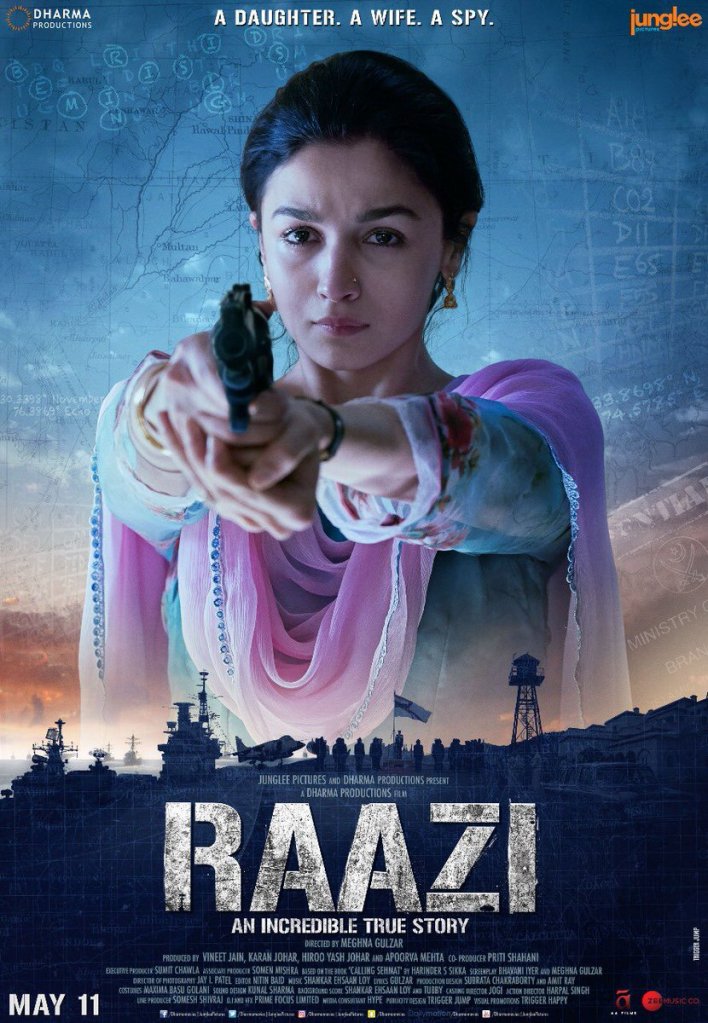
The movie Raazi, would thus be our Virgo pick! Sehmat’s character fits the definition of an ideal Virgo woman perfectly, who surrendered her life to her country and pulled off a challenging mission through her acumen, while appearing naïve and diffident on the outside.

Raazi Movie

10. Libra:

The symbol (balance) is quite self-explanatory when it comes to Librans. A Libra woman believes in justice and equality. She is in no way shy, rather quite social and outgoing. Also, she is a born leader, familiar well with the human psyche and her own personality.

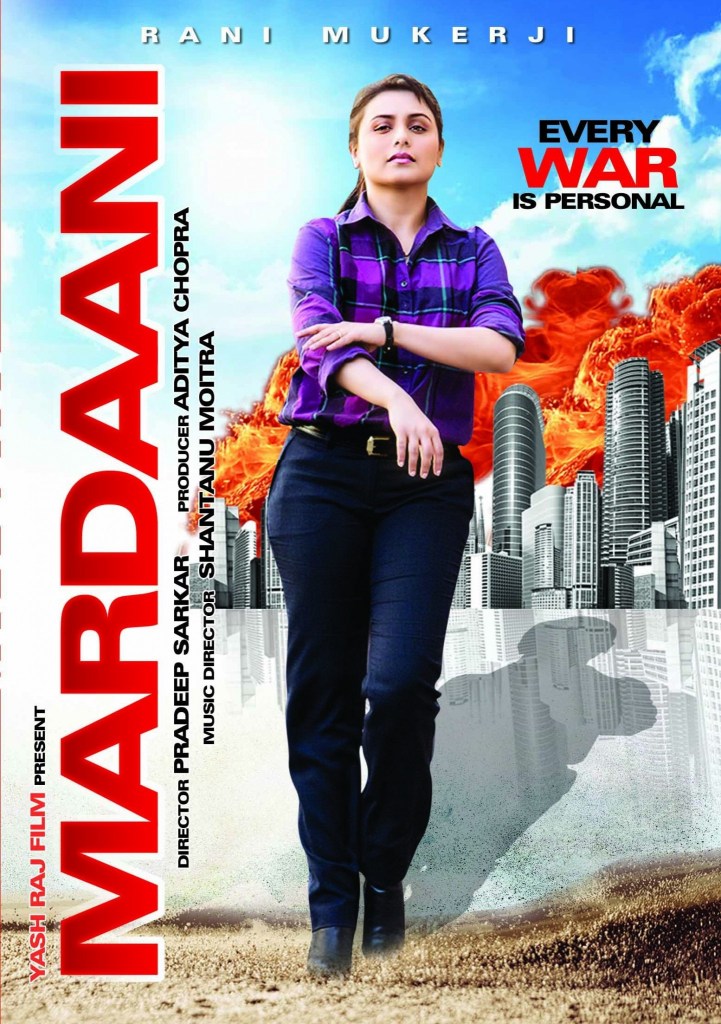
Did someone say women are the weaker gender? Maybe they don’t know Inspector Shivani Shivaji Roy. Rani Mukherjee’s Mardaani franchise is what a Libra woman should be looking at this weekend. Filled with power-packed performance by the main lead, who breaks all the stereotypes and strives for justice as a lone wolf (if need be)!

Mardaani Movie

11. Capricorn:

A Capricorn woman would keep her feelings to herself and will act unsentimental, even when she’s full of emotions. The obstinate Capricorn would do what she has put her mind to, no matter what it takes (and will most likely succeed in her goals). No one can tell what they thinking – pretty complicated beings!

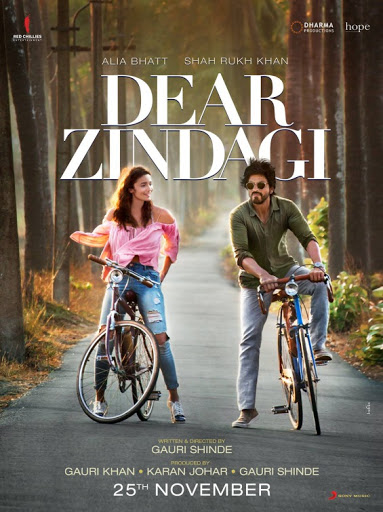
Capricorns maybe able to resonate with Kaira from Dear Zindagi, to a great extent. While she may emerge as an uncompromising and rude character, there were many layers to her personality, which she managed to conceal. Knowing her might help to know our Capricorns better!

Dear Zindagi Movie

12. Aquarius:

Trying to control an Aquarius woman is never a good idea. Her independence is her strength. She will always find an unconventional way to do things and doesn’t like to follow the norm. Just as fun as an Aquarian is, she is also empathetic but emotions stay on the surface and have no greater significance for her.

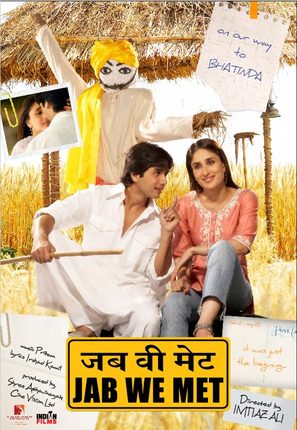
The more I think about Aquarians, the more I can see their similarities with Geet from Jab We Met – the character loved by most till date. The Bhatinda ki Sikhni taught us to put ourselves before everyone else & ups and downs are a part of life; ‘aagay kya honay wala hai ispe kisi ka control toh hai nahi, toh aise mei main wohi karti hoon jo mera dil karta hai’ is our new mantra!

Jab We Met Movie
Motivational Speech

From The CEO’s Desk

From The CEO’s Desk

Hello friends, hope you have been well; if there is one prayer I could make for you it would be that Allah blesses you all with content of the heart. Isn’t that the greatest gift? So much happens in our lives that we have no control over, we worry and fret over every uncontrollable, unsolvable part of our lives. I wish we could just accept life the way it is. I wish we could just leave be what cannot be changed.

Motivational Speech

Now don’t confuse this with making change, don’t confuse this with having to work hard for what needs to change and what we need to struggle to change. We have to work for that, that is what we are all here to do. We will no doubt accomplish what we have set out to do. However, we cannot get on with the real work unless we close those open doors and windows bringing in ghosts that are whispering bitter-sweets, in the end, all that is left is bitter.

Let’s help each other move on. Speaking of moving on, do I need to remind you that we have great content on the website almost every week and we are bringing great material to you on our YouTube channel as well. If you are liking what we already have, just keep watching, reading, there is a lot more coming.

Yes, I plug shamelessly because we work tirelessly.

Stay in good health and good spirits and as always tell me more of what you want to read and see. My job is to give you what you want.

In the meantime you look after yourselves, ya hear?

Ma’a asalaama

Mahvish Akhtar

If ‘All The Bright Places’ by Jennifer Niven was a Pakistani show

All The Bright Places is one of the most celebrated novels of Jennifer Niven. It focuses on issues of mental health and depression through the story of Finch & Violet, from Indiana. But how would the story be different if it was a mainstream Pakistani drama serial?

The encounter:

It would start off a little differently where our female protagonist, Vardah meets our male protagonist, Faraz at work, during one of her depressive episodes. In All The Bright Places (ATBP), we had Finch suffering from bipolar disorder (manic depression) but how dare we show a man as a weaker, more vulnerable gender in ‘our’ drama.

Vardah is an innocent and naïve girl, coming from a humble background and Faraz, her new ‘rich’ boss falls in love with her instantly. The setting here must be changed from high school to an office because we simply cannot promote teen romance!

Our female lead is simply beautiful; long hair, big eyes, slim, moderate height and gora rang. And Faraz is…wait, who cares what he looks like? He’s a wealthy businessman who will be her savior & his ‘love’ will cure all her ‘sadness’ (because depression is just a myth, after all). That should be sufficient.

The visits:

Faraz comes up with a way to save her from all her troubles (and be her hero). He offers her to work on a big project (did someone say favoritism at work?), involving ‘site visits’ with him (reference to the school project to explore Indiana, which Finch & Violet had). What business he has, shall never be disclosed. All we know is that he attends lots of meetings, wears bespoke three-piece suits & makes constant references to random files and reports. That’s what big businessmen do, don’t they?

The site visits turn out to be just an excuse to spend some time with Vardah and they go everywhere but sites. Unlike Finch from ATBP who came up with a rule to leave something (physical) behind to show they were at a place, our Faraz wants to create memories, which the audience will repeatedly see in their flashback, supported by sad, emotional OST playing in the background. They visit Sea View, and draw hearts in sand, mall because how is he rich if he doesn’t spend bucks on buying designer clothes for his lady, and finally, dinner at his regular fancy café.

One day spent together is all it takes Vardah to open up about her ‘sadness’. And it is nothing other than her financial situation (because that’s the most creative we can get) that’s ‘worrying’ her. He consoles her by saying ‘sab theek hojayega’ and confesses about his feelings, only to realize it is mutual.

The climax & end:

Just like Ryan (Violets’ ex), we have Rizwan, whose sole purpose is to separate the two. He was no ex of Vardah (she is a morally white character) but sent by Faraz’s father because he didn’t want his son to marry a poor girl like Vardah. Didn’t see that coming, did you?

Faraz starts to doubt Vardah’s character and feels betrayed. Neither does he answer her calls nor reply to her messages (but he is still our hero). He stops coming to work & the only option left for Vardah is to confront him face-to-face. She goes to his house, they meet and all the misunderstandings are magically cleared.

Father sees his plans failing & now conspires to get her killed. They are rich people so we will assume, getting arrested is not their concern. Since every Pakistani drama is incomplete without someone dying, instead of Vardah, Faraz mistakenly gets shot and that will also be considered as a punishment for the father.

In the book, Finch took his life away as his mental health worsened but we do not show someone’s death out of depression in our shows. Our mentality doesn’t allow us to think along those lines where someone dies due to a mental illness.

The facts:

As per statistics, more than 14 million people in Pakistan suffer from some form of mental illness, majority being women. Many have also committed suicide due to the same, yet it is overlooked & shunned in our society. People cannot openly talk about their mental health in the fear of being mocked.

Our media avoids this issue too. We don’t see news about mental health in mainstream media and the issue has only been raised on social media platforms, that too very recently. Apart from a few dramas, we do not see characters, especially male characters, which aren’t mentally strong and need help. It’s time this changes. We need to see such issues being highlighted in our dramas that do not seem to move past stories involving sister rivalries, caste conflicts & saas-bahu clashes.

Should I get married in secret?

Dear         ہمراز

My parents want me to marry someone from my baba’s family. I met him years ago. Now I met him again three months ago when they gave the Rishta. He’s not a bad person, but I don’t know him or his family. Everyone is in a hurry to accept the Rishta and say yes. I think it’s because I want to say no.

My question is, should just do Nikkah with someone else in secret? That way, my parents can’t make me marry him. It’s not like I’m in love with anyone, but there are many men I know much better than this guy. I would rather spend my life with someone I know than with a stranger.

Looking for an out,

 Fareen.

(edited for length and clarity)

Dear Fareen,

I wish there was a simple answer. There are a few questions you need to ask yourself before you make any kind of decision۔

Question 1: Is this decision not even to consider this guy coming from a place of not wanting to marry THIS guy or not wanting to marry this guy because your family is recommending him? Dig deep?  You are obviously not against getting married. And you are ready to marry someone you are not in love with.

Question 2: Have the reasons been clearly communicated to your family as to why you don’t want to marry this guy? Many times the real problems get lost in translation. It feels like we are clear about the situation, but we think that way because we are transparent in our heads, it might not feel that way to others.

Question 3: Have you asked your parents and other adults why this person? Why now? Are you clear on that? Again, so much gets lost in translation. Not that any reason would be good enough to force you to do anything you don’t want to. However, finding out their reasons might make it easier for you to talk to them in their language and make them understand.

So many times in these kinds of situations, we assume the other party understands and doesn’t care, or we assume that they just don’t care to even find out about our reasons. We have to stop guessing and give it our all before going to extreme measures. I am not ALWAYS against extreme measures, but if those measures are not going to make you happy, then why?

Im not in the business of giving yes or no answers, but this one time, I would say NO to marrying some random guy to avoid marrying some random guy.

 I think this is a very high-stress high emotional situation for you. Tell your family you might think about it if you had the time and less stress of having to decide in a hurry.

Don’t ruin your life with someone else in fear of ruining your experience with this one.

I hope this helps.

Write back. Let me know if any of this was helpful.

Comment, like, share, ask away.

Im Always Here.

Yourہمراز .

Benefits of Therapy

BENEFITS OF THERAPY – Femme Rang

By Saira Majid

  1. Therapy can reduce physical symptoms and boost your physical health.
  2. It can help people develop and foster passion, productivity, and balance in their lives.
  3. Therapy helps you untangle years of confusion and turmoil—and change unhealthy patterns.
  4. Therapy brings the benefit of a broader awareness to life, to not get wrapped up in a single way of living.
  5. It will give you a whole new perspective on other people.
  6. Talking about things gives them shape.
  7. You know you’re not alone.
  8. It will rewire your brain.
  9. It enables you to cope with daily life stressors on your own.
  10. So basically, when appropriate diagnoses are made and empirically supported treatments are undertaken, psychotherapy can be enormously beneficial in the treatment of a diverse range of psychological and physiological health issues.

Saira Majid is a Resident Psychologist at femmerang’s Mental Wellness Services. She is currently a professor as well.

@saira.majid.sheikh

From The CEOs Desk

From The Femmerang’s CEO Desk

Hello friends, hope you have been well; if there is one prayer I could make for you it would be that Allah blesses you all with content of the heart. Isn’t that the greatest gift? So much happens in our lives that we have no control over, we worry and fret over every  uncontrollable, unsolvable part of our lives. I wish we could just accept life the way it is. I wish we could just leave be what cannot be changed.

Now don’t confuse this with making change, don’t confuse this with having to work hard for what needs to change and what we need to struggle to change. We have to work for that, that is what we are all here to do. We will no doubt accomplish what we have set out to do. However, we cannot get on with the real work unless we close those open doors and windows bringing in ghosts that are whispering bitter sweets, in the end all that is left is bitter.

Let’s help each other move on. Speaking on moving on, do I need to remind you that we have great content on the website almost every week and we are bringing great material to you on our YouTube channel as well. If you are liking what we already have, just keep waiting and watching, reading, there is a lot more coming.

Yes I plug shamelessly because we work tirelessly.

Stay in good health and good spirits and as always tell me more of what you want to read and see. My job is to give you what you want.

In the mean you look after yourselves, ya hear?

Ma’a asalaama

Mahvish Akhtar

Never have I ever – Pakistani TV edition

Pakistani TV edition

Select Your Own Choice and Give Your Notion About These TV Actor’s.

[IT_EPOLL id=”3634″][/IT_EPOLL]
[IT_EPOLL id=”3638″][/IT_EPOLL]
[IT_EPOLL id=”3641″][/IT_EPOLL]
[IT_EPOLL id=”3644″][/IT_EPOLL]
[IT_EPOLL id=”3647″][/IT_EPOLL]
[IT_EPOLL id=”3650″][/IT_EPOLL]
[IT_EPOLL id=”3653″][/IT_EPOLL]
[IT_EPOLL id=”3656″][/IT_EPOLL]
[IT_EPOLL id=”3659″][/IT_EPOLL]
[IT_EPOLL id=”3662″][/IT_EPOLL]

Which Harry Potter female wizard are you?

Here are some Quizzes For Which You have to Wait Please Choose Option That Impressed You.
[IT_EPOLL id=”3604″][/IT_EPOLL]
[IT_EPOLL id=”3610″][/IT_EPOLL]
[IT_EPOLL id=”3613″][/IT_EPOLL]
[IT_EPOLL id=”3616″][/IT_EPOLL]
[IT_EPOLL id=”3618″][/IT_EPOLL]
[IT_EPOLL id=”3620″][/IT_EPOLL]
[IT_EPOLL id=”3622″][/IT_EPOLL]
[IT_EPOLL id=”3624″][/IT_EPOLL]
[IT_EPOLL id=”3626″][/IT_EPOLL]
[IT_EPOLL id=”3628″][/IT_EPOLL]

Femmerang had a chat with, Director, Photographer, Mother, Wife and Home-Maker Mandana Zaidi

Femmerang had a chat with, Director, Photographer, Mother, Wife and Home-Maker Mandana Zaidi. Let’s Dive in.

Femmerang: Starting with your childhood, tell me about where and how you grew up.

Mandana Zaidi: I was born in Nairobi, Kenya and Kenya’s conditions were not very likable after a few years of our birth. My father’s side of the family lived in Lahore, Pakistan & he said he wanted to go back to my homeland and there’s nothing like a homeland. My mother was not in favor of us moving but she couldn’t sustain. We lived in Nairobi for ten years and four of us, two brothers and two sisters were born there. Then, we all moved to Lahore and I think I was five years old when I moved to Pakistan and since then I have been here, in Lahore. My father has been a professor and then the chairman of Punjab University, fine arts department, so, art and painting. My mother was also a fine arts student & she was a painter. So, they met there, had a love marriage and my mother was the only daughter.

So, we came back to Pakistan, lived here long. My brother, who was the eldest, was never happy here. He said I don’t want to live in Pakistan. He was the one who left Pakistan after FA. After FA, he said to baba (my father) that he did not want to live in Pakistan and my father told him he would send him abroad if he gets admission and passes the exams. So, he actually did that. He applied for universities and got him admission and then my father had no choice, and being a professor at that time, he had two jobs. He was working for advertising and was simultaneously teaching at university. It was not easy for him to send him but as he had promised, we actually had to give up our home in Model Town and give it out for rent and move to a new campus, residential area, which is given to university professors. And, we moved and my brother was sent away to the USA for studies.

We have spent our whole life in Lahore and he went abroad. I completed my master’s in fine arts from university and all my education is from here, fine arts in Lahore College because ‘’ didn’t have fine arts at that time. So, that’s it. I pretty much had the culture in my house of a lot of students coming for help from my father, a culture of art and craft, assignments, and projects and I was very close to my father, always glued to him. I had a very strange relationship and a very close one with my father. My mother was a housewife; she had to raise four kids. She used to teach in Grammar but then she had to leave because we were too young and it was complicated. And then she was diabetic so she could not survive it, shortly after I got married.

Our childhood was very nice. Cousins used to come and stay over during summers, there used to be my father’s students at our place, a lot of interactions with older and younger people. So we were all very social, rather say I was very social, my brothers not really and my sister was not also really. I think because I spent a lot of time with my father, I was a very social person.

FR: So you basically got introduced to all these different kinds of people, different things because you were just close to your father, you spent a lot of time with him.

MZ: And my father is like a poet, painter, and writer. So, there is a lot of influence of all of those things, and art. Mostly on me than any of my other siblings and I am the only one out of my siblings from an arts field.

FR: The way you saw women living in Africa, and then you came to Pakistan, was there a huge difference? Did that impact you and your adult life?

MZ: I think there was a lot of difference. When we came to Pakistan, even the schools were Urdu medium. So, the education system we were used to, we had no sense of Urdu in our lives, it was very difficult. One year even got wasted because no admissions were taking place and also, even math and sciences were in Urdu, and we couldn’t cope with that. So, we had to waste a year getting our admissions, all of us actually stayed one year behind our classes. But then, it was hard to cope with it. I was very different as a child. I was very talkative and people could not understand this behavior over here. It was that time when somebody talking in English would be a prefect. And being a girl, and in my house, there were no limitations and it wasn’t like you are a girl so you cannot do this. I think I got that culturally from my house but had to deal with external things where my friends did not get permission to meet us or come over to our house. But, still, I made a lot of friends and kind of a good relationship with them & still in touch with them.

FR: What was your first experience when you first felt like you are now a woman.

MZ: I think I felt like a woman after I got my periods. You have to behave like a woman; that’s the kind of conversation that started happening around me. You can’t play with boys and I hated being a woman. My brothers used to ask me to not go out. They were very protective of me. It was kind of suffocating me but my father was the biggest supporter of what I wanted to do. I did everything, maybe in the reaction of it but I just had to be out there. There was no boyfriend and there was no need for it. Around me, all my friends, in my college time, started having boyfriends and this and that, dating, hiding it from the parents but I just didn’t like it. I could not agree with it and was very suffocated by that concept. How can you meet a guy and you’re bluffing and lying and you have a relationship and never going to be married to the same man and the love and all? I think already got it from my family, maybe that’s why. That care, that affection, that emotional strength that I needed at that age to know the right and wrong and to know the difference between what would work and not.

Boys who were my very good friends, and there were a lot of male friends I had, we had good communication. But, there is no concept like that in Pakistan. If a girl went out with you somewhere, guys used to think she’s his girlfriend. I used to make it very clear. I was a very straightforward, honest person when my feelings were concerned. I would love to say that yes, there were men that I liked but somehow I had this clarity there’s not somebody I could spend my life as a married couple with them. Too young to make that decision, that’s what I used to think. It was because of the learning from my father when he was home, he was sitting with me, chatting, writing, drawing, or doing something with his students, and am just sitting there.

FR: How hard or easy have you found it to be a female in the real world as a Pakistani?

MZ: I think I started working right after school. I did an internship in Lahore Museum, I remember. I said to my father that I want to do some work. I helped this woman for 3-4 months, the summer holidays at the time when you get admission into college, and when I was working at the Lahore Museum, I got exposed to a lot of nature, artwork, and catalogs. It was a lovely experience, very independent. I got some pocket money. That independence really took me from there to the fact that when I got to my university, I started acting. I stopped taking money from my father and I started paying my own fees. Since there was too much responsibility on my father, I wanted to do it myself. I started acting and did this play called ‘Shashlik’ and it was a very big, popular drama that came on PTV. It was a sitcom, and I played the role of a girl who came from a village, started living in the town, and she had to cope with it. Sarmad Khoosat was in it. Nadia Afghan was in it. When I was getting admission in the university, she called me and said you wanted to act so here’s the role, and we are shooting a pilot, come tomorrow and shoot it with us. It was that and I started acting. And from that, it just carried on and when I was doing masters, I left it because of papers and exams. I had to give my thesis so I had to drop it. And by that time I also met Ali Noor, who is now my husband. We started working on his album and his dream and passion and started dating him. When he said to me that I can only date a woman who can go tell her father am dating this man and I said that’s brilliant, I want to do that exact same thing. I went to my father and told him that baba; this is the guy, if you like him very good, if you don’t like him he’s going to be shelved. He had met him before because of my sister. My sister was working with him. So, he really liked him, his family and all, and said sure. That’s how we had a 7-year long relationship. And in that relationship it was quite crazy because at that time, having a relationship and because he was famous and the whole world knew about his girlfriend, the only sanity was the fact that I had I had told my father, my father knew, my family knew, so I had no fear in my head about it. Our relationship was primarily built on affection, love but also work. So, that kind of kept us together.

FR: Being a female in Pakistan, these things are definitely difficult to manage. For guys, they can do whatever they want, you can date five girls at a time, no one’s going to say anything and justify it as that being part of a man’s nature. For girls, if they talk to even one guy, people make a big deal out of it.

MZ: I am sure, I must have had this too but I was very lucky. I would say luck because there was no engagement, there was no commitment, and there was no thing like they are going to get married. I just went along with my gut and I believed in our relationship in a very different way, I would say. And sometimes Ali Noor says to me that we were meant to be together. I guess it was like that. As childish as we were at that time, we did a lot of breakups too and all that what young people do. But the fact is that things were so open with my parents, which I don’t think any woman has experienced. The relationship was so clean between my parents that they would criticize me, also told me things that I needed to know and at the same time they were not imposing themselves. They wanted me to be independent, to make my own decisions. And I think that is the only privilege I had than other women. I swear because of that confidence, I was able to not give a damn about anybody else. When you have your own support system with you, you don’t care about what the world is saying.

FR: That’s the most important thing as because of this girls and boys hide and end up making wrong decisions.

MZ: There are a lot of mistakes that can happen a long the way and a lot of heartbreaks and a lot of things that are involved in this process and I think, being patient and more logical about stuff kind of helped. Again, I had no friends like me, as because of their own household system, they could not do that. One of my friends, who really liked this guy, she wanted to marry him but her parents did not let her do that and got her married off to her cousin. At that point in time, it was all happening around me but in my house I felt there was always this freedom that my brothers also had and my sister and I we both had. We could make our decisions and they (parents) would support no matter what, whether wrong or right.

FR: Have you felt like over the years, in Pakistan or in general, the work you’ve done, it has been little bit diminished or has been not as appreciated as it would have been if you were a guy/man?

MZ: I think, I feel, being married and being in a relationship – I’ve been married for 16 years now and before that knew each other for 7 years – the biggest learning of mine is that over time I had different roles to play as wife, bahu (daughter-in-law), and daughter and now am a mother. The biggest role that I feel has been taken for granted is being a mother. It’s like you are a housewife, a housemaid and you feel guilty and it’s your obligation. Once you become a mother, the responsibility is by default yours. I think that’s where I don’t agree with this Pakistani culture. Men have completely taken a side role because you ate the housewife. Even if you’re working or not working, your job is to come home and take care of the kids. Your job is to cook food and to take care of or manage the servants that you have. But your duty is your responsibility but my (men’s) job is to work and provide.

FR: And these are not men who belong to older schools of thought, these are men right now who are enlightened, who are brought up with us and who understand everything. But they just have this idea and explaining this to them is so hard. One of things where you just want them to do it, take care of it. I am working the same hours you are and why am I supposed to just take care of it?

MZ: That is what bothers the hell out of me. I think, from an old generation, I don’t want to pass it on to my kids. I don’t want my son to think like that. I don’t want my daughter to think like that. I want them to have life partners, if they ever have, who are able to be like partners not be a just providers because that’s a very easy role, women and men both can have it but then woman having it will also be doing the house chores, so why can’t men do that? I think that’s what woman liberation is about. I don’t think it’s about anything else. It’s you who has to believe in it and in our generation, we were not able to be taught this and now the times are right, maybe the time now is when we can teach this to our children, to our boys, especially. I don’t think they should not know how to cook or make a bed.

FR: What would you do differently with your kids, to raise them? I know you have a son and a daughter.

MZ: I tell them the same thing everyday. I want my kids to be independent. My 7 year old is very independent. My 11 years old is very independent. And they are on their own, they can survive and they can do their own things and they don’t need me and I intend to keep it like that. I raised them to believe that if they need somebody in their lives that will be based on their equality, their partnership, their relationship should be stronger than just taking care because that goes hand in hand with being together. I tell them that you have to learn to cook, my son does a lot of things with me, my daughter does a lot of things with me and I just train them to be like this. There’s no difference being a man or a woman. My daughter says there is no gender discrimination anymore, mama. There is no thing as a woman or a man anymore. She’s already there. She says, don’t say that because am a girl, you’re asking me to do something. And I say, am not asking you to do it because you are a girl but because you’re older and you can do it. I cannot ask your brother to do it because he cannot even reach the stool right now. I can’t change my husband now but I can change my kids. And bring them to understand what their role in a relationship is.

FR: You said you cannot change your husband, which is true, how do you manage, household, husband, kids and all those responsibilities? I want to ask this question because I don’t believe that women can have everything.

MZ: I don’t believe in it too. I think it’s a lot organization. I try to keep my day more organized as possible. I have to have time slots to do certain things with my kids and leave them on their own for some time so they can do their own things. Give them space and own learning and experiences. And because my husband and I work together, we have a kind of relationship that also has work dynamics in it. For me, to find my space is very important. I have learnt it over a very long time, it is my responsibility to take care of kids and all but it is also my need to be doing something of my own and stay connected and have a kind of life where I can grow. So, that I try and balance it out as much as I can. With the passage of time, you come to terms with it. When I was young, and had a lot more energy, there was no way I would burn out but now I feel get burned out and feel like I have too much on my plate. I have to disengage myself from work I have given other people to do. So tend to do that now and yes, I can’t give my kids’ responsibility to anybody else and I have accepted it. It’s something I have to digest.

The only question we didn’t get to ask Mandana was that did she know Obama or her grandma growing up in Kenya? Maybe next time.
Quiet Women Press Release

 Quiet Women:

 A Unique Celebration of Poetry and Art

Lahore based poet, editor and columnist, Afshan Shafi launched her first full length poetry collection, ‘Quiet Women’ last month. Stocked at Readings, the collection is a unique all-female collaboration featuring the illustrations of acclaimed artists , Samya Arif (Pakistan), Marjan Baniasadi (Iran) and Ishita Basu Mallik (India). 

TS Eliot award nominee and winner of the Forward Prize for Poetry , Vahni Capildeo termed  ‘Quiet Women’ as one of the ‘new poetries emerging in the twenty first century which are characterized by a ferocity that spans yet exceeds love and outrage, involvement and observation’

‘Quiet Women’ is an exploration of form and linguistic artistry, propelled by a sense of creative freedom espoused by the surrealists and  abstract artists. Inspired by the creations of both Eastern and Western female artists and writers this book is a tribute to women, and the power of their collective voices. 

Profile: Afshan Shafi lives in Lahore and has studied English Literature and International Relations at The University of Buckingham and Webster Graduate School London. Her poems have appeared in Poetry, Poetry Wales, Blackbox Manifold, Flag + Void, Luna Luna, Clinic, 3am magazine, Ala Champ Magazine, and others. Her poems have also appeared in the anthologies, Smear (edited by Greta Bellamacina) ,The New River Press Yearbook and Halal if you hear me ( edited by Fatima Asghar and Salma Elhilo). Her debut chapbook of poems ‘Odd Circles’ was published by Readings (Pakistan) in 2014. For her work as a poet she has been interviewed by Arte Tv (France) and Words Without Borders. She was a co-founder  of the Woolf Writing Club, a creative workshop series in Lahore. As part of the Jane Austen Society of Pakistan she has appeared on BBC (World), The Times (UK) and in The Economist’s culture magazine. She has also served as a poetry editor for The Missing Slate and is currently a senior contributing editor at Pakistan’s leading literary journal the  Aleph Review. She also serves as an editor-in-chief for the online Pandemonium Journal, which is a platform for emerging creatives from Pakistan and abroad. 

Inspiration to write this book:

This is my first full length collection and is a tribute to the  panoply of female artists that continue to inspire me. From the creations of Iranian artist Farideh Lashai to the work of lesser known poets like Veronica Forrest, there is a rich engagement with the work of these female trailblazers in ‘Quiet Women’. What makes the book different is its collaborative nature. Each artist  I have collaborated with in ‘Quiet Women’ possesses something unique to their perspective. Samya Arif’s illustrations are defined by their bold and stylized detail. She thinks in an opulent manner. Marjan Baniasadi, hails from Iran and has studied at the NCA and her paintings are elegant, deeply intelligent and beautiful. Ishita  Basu who lives in Calcutta, India,  is a poet as well as an artist and there is such a yearning and melancholy to her creations. Their art complements my writing seamlessly in the book.

Synopsis: (This is a blurb by the novelist Anis Shivani and describes ‘Quiet Women’ in good detail)

‘Never have I been so surprised upon reading a book given to me for endorsement; I was, and remain, in a state of shock. From the first words to the last, I remained under the impression that this was the work of a mid or even late career poet at the full peak of her powers; if I had read this book blindly, I might have suspected a poet the caliber of a Bernadette Mayer or Barbara Guest or Marie Howe. I still find it impossible to believe that this is the work of a poet for whom this is only the second book! I won’t comment on the technical wizardry Afshan Shafi has mastered like a veteran—from an internal music that never flags despite conveying complex ideas, to the confidence in initiating interrelated chains of challenging metaphors—but I will say that as someone who likes to indulge in quite a bit of fancy wordplay himself, I often told myself that the ability to stretch the limits of linguistic experiment without losing objective meaning was something I wish I possessed to the extent Afshan Shafi does. There isn’t a slack line in the entire book, it is a compressed whole, a dynamite unity, a wise history of female (aesthetic and social) awakening in a world that has lost its moorings that has few comparisons in the contemporary American poetry world I know best; certainly no one I know among the aspiring poets in America is capable of a mature, objective, dazzling performance such as this one. I can only imagine how far this poet will go, if she hangs on to her supreme confidence’- Anis Shivani, author of Karachi Raj

On how ‘Quiet Women’ came together

‘Quiet Women came together over a period of two years, where my poems were being frequently accepted by European magazines for publication. I decided to put together a collection of these poems with some newer verse with the intention to collaborate with artists for the final product. The titular poem of the collection ‘Quiet Women’ deals with the notion of female silence and the policing of a women’s language and her personal choices. For one reason or the other , this notion of ‘quietude’ had been drilled into me from an early age, and as I grew as a writer I started questioning all kinds of enforced silences, which in turn led me to critically examining all kinds of oppressive practices aimed at ‘containing’ the very agency of a woman. ‘Quiet Women’ as a book, functions for me as a bridge across a myriad number of fears; these verses are bridges across patriarchal structures, restrictive artistic ideologies, and perhaps purely existential concerns (quotes from a recent feature in DailyTimes Pakistan)

On the collaboration with artists for ‘Quiet Women’

I would say that I have been a student of the Surrealists my whole life, as I have often been drawn to the interplay of artist mediums, in which they revelled. Surreal output has always been concerned with  juxtapositions and techniques like ‘collage’ and ‘frottage’, and an indulgence in hybridity. For example , Surrealist collaborations include films based on poems, in the way that the filmmaker Man Ray adapted poems by Robert Desnos to his medium. Since my poems are often initiated by visual ephemera, and my imaginative focus is on delineating these visuals (triggered of course by emotion or artistic curiosity) , I found collaboration with these artists to be a natural progression. Each artist was sent the poem to illustrate without any instructions, the idea was for there to be a fluidity of connection, one derived purely by imaginative means, and for the artworks to be instinctual and primal.

Creative influences and the impact of Surrealism on my work

Each poem in ‘Quiet Women’ is a tribute to the marginalised , whether that figure be that of a woman or an artist or poet. Each poem aims to counter reality with the dream and to re-engineer the accepted image of the creative as ‘outlier’. Whether in terms of stylistic experimentation , influence or tribute, this book aims to upset normative modes of thought and glorify one’s creative faculty. A quote from the founder of Surrealism, Andre Breton, below, explicates much of how the imagination is seen as a threat to all dimensions of order , similarly, much of my work is concerned with consistently upending language, mass-perspective and received ideas in much of the spirit outlined here-

‘Beloved imagination, what I most like in you is your unsparing quality. There remains madness, “the madness that one locks up,” as it has aptly been described. That madness or another. We all know, in fact, that the insane owe their incarceration to a tiny number of legally reprehensible acts and that, were it not for these acts their freedom (or what we see as their freedom) would not be threatened. I am willing to admit that they are, to some degree, victims of their imagination, in that it induces them not to pay attention to certain rules – outside of which the species feels threatened – which we are all supposed to know and respect. But their profound indifference to the way in which we judge them, and even to the various punishments meted out to them, allows us to suppose that they derive a great deal of comfort and consolation from their imagination, that they enjoy their madness sufficiently to endure the thought that its validity does not extend beyond themselves. And, indeed, hallucinations, illusions, etc., are not a source of trifling pleasure’ (The Surrealist Manifesto)

On why I enjoy poetry as a genre and as my chosen form

A poet often writes a poem as a postscript to an emotion . ‘High tragedy’ or ‘wondrous joy’ need not compel the writing of verse, it could be a retained sense of childlike wonder for say an owl, or the precise engineering of a pistol. I feel that I write primarily to escape a powerful inoborn reticence. In that vein these words by the great James Joyce encapsulate perfectly the retaliatory bent of my mind as it stitches a sentence together; ‘poetry even when apparently most fantastic is always a revolt against artifice, a revolt, in a sense, against actuality’