What Is The SBT Technique?

Hi, hope all of you all are doing well and taking care of your mental health. We have covered lot of topics so far. Let’s have a brief recap on it. Well so far we have understood mental health and emotional healing, we discussed what are emotions and different types of emotions. Later we touched upon what is anxiety and types of anxieties and what are phobias and types of phobias. I also hope that you have managed to do the small assignments that were given for yourself reflection and awareness. Now it’s time to dive into the process of identifying the problem on a deeper level.

As promised that I will discuss ways of healing. And one of the most effective ways of healing is to apply the CBT technique in your life. 

So what is?

 What is the CBT technique?

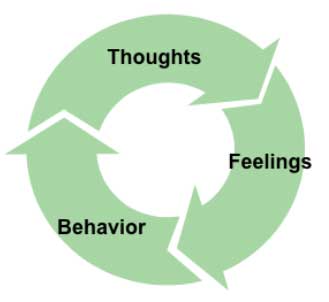
Cognitive-behavioral therapy (CBT) is a form of psychological treatment. It helps us identify our problem by breaking it down into three steps which enables us to identify our

Thoughts

Actions 

And feelings

It is based on two simple concepts that our thoughts influence our emotions and our emotions influence behavior. So what we think affects what we feel and do in life. Also what happens to us in life doesn’t matter but how we choose to interpret it.

Albert Ellis is the great psychotherapist who came up with the ABC model.

The ABC model

A Stands for ‘activating event’. That event can be external, either present or future, or even an internal one. It refers to an event that triggers a chain of thoughts, emotions, and behaviors. 

For example, I love a man and his family finally sent theproposal to my house and they are coming to meet me. What will happen? What if they reject me? I would feel like a failure if they do.

B stands for “belief”. The beliefs or the demands we hold about ourselves or others hold about us. These can be rational or irrational.

What will my parents think and feel they reject me? They must like me. I must not be rejected. 

C stands for consequences. It is an all-inclusive term that can include emotional and physical experiences and especially the behavioral responses that result from A and B.

Difficulty in sleeping, fatigue, the tension in muscles. 

I hope that you have developed some basic understanding of the CBT technique. How about you apply this technique? It is an important exercise towards self-healing. I am attaching a link of a worksheet that will help you to apply this technique in your daily life. If you are mother it’s

a request to do this exercise with your children. 


https://www.therapistaid.com/worksheets/cbt-for-kids.pdf


 In the next article, we will explore CBT differently. We will discover the types of unhealthy beliefs we hold about ourselves which automatically reflects in our actions. Till then take care and don’t forget to apply CBT technique. 



Zero Thinking

We all go through times of emotional distress, isn’t it? We feel broken, hurt, shattered, disappointed, or numb. The list of emotions a human mind can experience can go on and on. Researchers identified 27 unique emotions [i] and you could be feeling any one of them or most of them.

On Zero thinking we will be discussing feelings of anxiety, depression, shame, guilt, hurt anger, and grief. And the role of our environment and relationships to make us feel this way. We will also investigate the role of childhood and its impact on the individual. 

Don’t worry we will not only be dissecting the problems, we will go step by step towards our emotional healing and well-being.

So are you ready? Let’s take some baby steps. We will start by understanding what is mental health and emotional healing. 

Mental health is a state in which you are connected with your body, mind, and soul. Mental health includes emotional, psychological, and social well-being. Mental health is important in every phase of life, from childhood and adolescence through adulthood. There could be many factors that contribute to mental health problems, including:

  • Biological factors, such as genes or brain chemistry
  • Life experiences, such as trauma or abuse
  • Family history of mental health problems

We will try to dig into these factors one by one and try to come towards emotional healing.

For that, we need to understand what is emotional healing? 

Dr Harry Barry explains emotional healing as a process and includes two components:

  1. Identifying our emotional responses to any negative experience which has occurred in our life as our thinking patterns, perceptions, and beliefs underlying such emotions and finally the unhealthy patterns that came as a result of them.
  2. After identifying these, how we reshape these thoughts, emotions, and behaviors with the goal of healing ourselves. 

We will one by one study emotions and its relation to our environment and its impact on our personality. 

And for that, you need to wait for the next article in which we will discuss what are emotions and how can we identify them. Till then have a good day.

  [i] Cowen AS, Keltner D. Self-report captures 27 distinct categories of emotion bridged by continuous gradients.


Anxiety

By Tooba Tahir

Hello there, how are you? I’m sure you have identified the type of anxiety you feel. If not, then please read the previous article so that you receive a better understanding of yourself. 

Today we will briefly discuss what are panic attacks and phobias. And later explore techniques to deal with them. So, let’s get started

So what do you think are panic attacks?

Panic Attack

Well, panic attacks arise suddenly, usually without warning, and often at the most inappropriate time and place. It is a sudden episode of fear that causes physical reactions. You might feel that you are losing control, having a heart attack, or dying.

Few signs of Panic Attack 

Sense of impending doom or danger, fear of loss of control or death, pounding heart rate, sweating, trembling, shortness of breath, chest pain, headache, dizziness, numbness, feeling of unreality or detachment.

The challenging part of panic attacks is the constant fear that it might occur again so people avoid the situations in which it might get triggered. 

What causes panic attacks?

There could be multiple reasons since they come suddenly without any warning, so they are mostly triggered by certain situations. Some panic attacks occur due to stress, Temperament that is prone to negative emotions, for example, unhealthy thinking habits or it can also be genetics. 

Now that we have a little understanding about Panic Attacks, lets briefly touch base on what are phobias?

What are Phobias?

In simple words, a phobia is an excessive or irrational fear reaction. Phobias can lead to panic attacks. There are many kinds of phobias and they can interfere with work, the educational and personal life of people. 

Few types of Phobias are:

Glossophobia: Fear of speaking in front of an audience. 

Acrophobia: This is the fear of heights. 

Claustrophobia: This is a fear of enclosed or tight spaces. 

Aviophobia: This is also known as the fear of flying.

Dentophobia: Dentophobia is a fear of the dentist or dental procedures. 

Hemophobia: This is a phobia of blood or injury. A person with hemophobia may faint when they come in contact with their own blood or another person’s blood.

Arachnophobia: This means fear of spiders.

Cynophobia: This is a fear of dogs.

Ophidiophobia: People with this phobia fear snakes.

Nyctophobia: This phobia is a fear of the nighttime or darkness. It almost always begins as a typical childhood fear. When it progresses past adolescence, it’s considered a phobia.

Now that you know a bit about panic attacks and phobias, it’s a humble request to identify your phobias and notice the symptoms during panic attacks. It’s time to dig deep into self-reflection and ask yourself few questions like when I feel shortness of breath? When I am fearful? And write them on a piece of paper. In the next article, we will explore a case study to understand how we can manage our panic attacks and phobias. 

Till then stay strong. 


What Are Emotions?

Hi everyone, hope you all are doing well. In the previous article, we discussed what is mental health and emotional healing. If you missed out on that article, please go back and read it before you read this one.

Today we will be exploring what are emotions and what are the ways to identify them. Also, I will give you a small exercise towards the end, which will help you understand your emotions and yourself better. 

So what are emotions? 

To answer this we need to understand what the conscious and unconscious mind is. According to Freud “The conscious mind contains all of the thoughts, memories, feelings, and wishes of which we are aware at any given moment. The unconscious mind is a reservoir of feelings, thoughts, urges, and memories that are outside of our conscious awareness.[i] 

Emotions are intense feelings or sensations which can be triggered by conscious and unconscious events. They are connected to our thoughts and behaviors and play an important role in our lives. 

Emotions can be positive, negative, healthy, and unhealthy.

Positive emotions include joy, happiness, pleasure, love, contentment, and peace. We call them positive emotions as they make us feel positive about ourselves. 

Healthy negative emotions such as sadness help us cope with difficulties such as loss. But it helps us to come in terms with some loss in our lives.

Unhealthy negative emotions often impede us in dealing with such difficulties as we classify depression as negative emotions. They make us feel bad about ourselves. 

Whatever emotion we feel it has physical symptoms. For example, anger may mean clenched muscles or tension headaches, fear may lead to dry mouth or difficulties in breathing. 

Emotions are connected to our behaviors and are interwoven with our thoughts. We are most uncomfortable talking about how an event made us feel? In my teaching experience, men usually take more time than women to identify or reflect on their emotions. 

If we want to heal, we need to open our wounds. Let us start with the discussion on our childhood. Write down the events that created unhealthy negative or healthy negative emotions in your life. 

Here is the list of few emotions that can help you identify what emotions you experienced:

Unhealthy negative emotions

Anxiety

Depression

Hurt

Anger 

Shame

Guilt

Frustration 

Healthy negative emotions may include:

Concern 

Sadness

Remorse

Regret

Disappointment 

Annoyance 

Next time you hear me, I hope that you have taken some time out to do this exercise. And identified the negative emotions you have been carrying inside you.  

  [i] https://www.verywellmind.com/the-conscious-and-unconscious-mind-

 Emotions & types of emotions by DR Harry Barry


Zero Thinking

Hi everybody, how are you feeling? In the previous article, we discussed what is guilt and types of guilt. If you are struggling with guilt then let’s explore what are the underlining causes regarding it and how can we manage it?

 Guilt exists due to the fixed irrational belief that you should have known what might have happened in the future. They believe that you should have known in advance all the negative consequences. And the following thinking pattern that you should have made a different decision.

Since you cannot change the decision you made, you feel trapped can’t find any way out. You may find yourself revisiting the past and rewriting the script of the event. 

 You may also avoid meeting those whom you believe have been impacted by your decision or those who remind you of the effects of the decisions. Constantly trying to make up for the mistakes you believe you made can place immense stress on emotional wellbeing. You may consider or act out some self-harm attempts as you believe that the damage is irreparable. Or taking drugs or alcohol in an attempt to punish yourself. 

 To heal and manage guilt we need to have the following conversation with ourselves.

  1. To communicate with oneself and understand that we cannot anticipate what, if any, potentially negative consequences might ensue.
  2. You must challenge and change the negative thinking pattern. Thinking that avoiding people, places that remind you of the guilt or self-medicating with drugs or self-harm will not change the irrational belief of guilt you have. It will not change the negative outcome of which occurred due to the decision/s you took. Beating yourself up is not also a waste of time but unhealthy for your mental health. 
  3. Apply the CBT technique which is explained in detail in the previous articles 
  4. “Accepting” and understanding that there is no use of being angry or frustrated with oneself for being able to predict the future. 
  5. Being your authentic self and true to oneself and repeating this to yourself that “I took the decision which best of my intentions”. Moreover repeating that “I cannot control the outcome”. 

 I hope and pray that these small steps help you change the negative, irrational and unhealthy thinking patterns. If you feel that you need professional help, please feel free to reach out to femmerang team.

Zero Thinking

Hi everyone, hope you are doing well. Prayers for my readers who consciously make effort for their healing and well-being. Today we will be exploring another unhealthy negative emotion. This emotion can be very destructive and lead to self-harm as well. This emotion is linked with the emotion we discussed earlier in the articles, that is depression and anxiety. 

This negative emotion is called Guilt. It is wishful thinking that you could turn back the clock to change the outcome of few decisions you made in past. It makes you go through the loop of regret and remorse. What if I tell you that it is possible to release yourself from the guilt and restore your inner sense of peace? To release guilt we need to understand what guilt is and how it is created.

Guilt 

Guilt is an unhealthy negative emotion that carries this belief that something you have done has caused harm and distress to other person or people. It is a cycle of negative thinking in which we are unable to forgive ourselves for some action or behavior. So we beat ourselves up with the feeling of remorse and regret. 


Difference between guilt and shame


We earlier also explored the feeling of shame. People confuse shame with guilt. Shame is an internally felt emotion triggered by the risk of others finding out something about us and judging us negatively. Whereas guilt is more related to the consequences of actions that we have or have not taken and how these have impinged on others. 


Guilt is such a destructive emotion that has led to serious self-harm as the person sees no way out of the crisis of the guilt they have created. 


Let’s explore the top 5 common guilt triggers 


  1. Relationship Guilt: This may include one party having an affair or affairs often unknown to others. Spending too much time at work and not managing time with loved ones. Not visiting or keeping contact with an elderly person or relative who subsequently dies.
  2. Financial Guilt: Due to financial issues it leads us to make extremely poor decisions with disastrous consequences. 
  3. Abuse Guilt: You may feel guilty for not stopping or intervening in a past situation where someone close to you was being abused. 
  4. Accident Guilt: This guilt is a belief that you could have avoided some circumstances where another person was seriously injured or died as a result of an accident or mishap. 
  5. Survivor Guilt: This is common to those who survive an accident along with their family members/friends and they pass away. They feel that they could have died and their loved ones could have been alive. 


In the next article, we will explore how can we manage our emotion of guilt? So stay tuned and stay strong. 

zero thinking

Zero Thinking

Hi brave soul. Why did I call you brave? Well, you are brave because of two reasons. Number one for reading articles on mental health. That shows you want to learn about yourself and grow. And second, you identified and thought about the things you are ashamed of. And that’s beautiful. A good start. 

As promised, let’s dig deep to understand how we can manage the emotions of shame?

Whatever you are ashamed of, you need to understand that IT IS AN IRRATIONAL BELIEF that others will discover something negative about you. And also that you must accept their judgment.  We all that internal critic making us falsely believe that you are a failure, useless, worthless, etc. When happens in shame you believe that others will apply the same. If you believe that you as a human can be rated at all, the trouble begins. 

Self-Acceptance: 

We need to understand that as humans we all make and will make mistakes. We need to give ourselves room for improvement. That can only happen when we accept the mistake and focus more on ways to improve and channelize our emotions positively. Being over-critical and saying unhealthy sentences to ourselves is waste of time and energy. Say positive things to yourself and think of what steps can be taken to improve. For example, “I am a failure” can be looked at as “I need to work harder” or “I learned something new”. This exercise helps us to create new healthy patterns and opportunities.

Forgiveness:

 Self-acceptance cannot take place until we forgive ourselves for the mistakes we made. We need to release the baggage of old self and think of how you want to be? And take baby steps to reach that. Set small targets or goals. Create a journal/diary or write on a whiteboard to keep a track of your progress.

Self-Love: 

When you follow these steps, self-love takes place. As you take care of your emotional, physical, and spiritual needs self-love comes along. The key to self-love is self-discipline. So daily small habits done repeatedly make all the difference.

It’s time for you to create achievable things to do for the next year. This year love yourself better, which will lead to loving others. Which will lead to doing what makes YOU happy and eventually your light will impact others too. Till then keep shining. See you soon. 

zero thinking

Zero Thinking

Hi everyone hopes you are doing well

Today we will shed light on another negative emotion that we can relate to in some phase of our life. Are you prone to being affected by what others, in your mind, think of you as a person, but you would love to learn otherwise?.

Well, let me tell you that YES it is possible.

For that, we first need to understand this emotion. Let me introduce you to the shadowy word SHAME!

What is Shame?

Shame is a deeply felt, painful experience that is socially driven. It’s a feeling in which we believe that we are perceived by others as being unworthy of their respect. This is possible because due to the actions we have personally or as a group taken. Or shame is also a feeling in which we hold ourselves accountable for any internal code we have broken and we judge ourselves or become too critical and hard on ourselves. This is sometimes called internal shame. 

It’s a natural progression to move from depression to shame. Because it’s linked with an irrational belief that I can be measured, rated, or judged by others. 

We are social creatures and we all want and like to be part of a group that accepts us. Therefore we don’t want anyone to find out something unpleasant about us or a situation related to us. 

Let’s find out 

few causes of shame:

1. If you have been brought up in a socially deprived area, criminal family history, or domestic or family violence. 

2. You may be ashamed of your body. Ashamed what others will think about your appearance.

3. You may find yourself in debt, bad financial standing, ashamed of your financial decisions. And hiding from your partner, family, friends, etc.

4. You might be a victim of social media trolling or shaming.

5. You may be a victim of sexual abuse, sexual assault, rape, domestic abuse, or violence.

6. You may be a couple with infertility issues. 

7. You may be struggling with loneliness. And not found your partner and ashamed what others will think that why I am not married. 

8. You may be struggling with mental health problems like OCD, depression. Bipolar etc.

9. You may be suffering from social anxiety. What others will think if I mess up the presentation etc.

10. You may be struggling with a hidden addiction to alcohol, drugs, etc.

These were just a few of the experiences people are ashamed of. Please write to us and share if you are brave enough to let out what you are ashamed of? As in the next article, we will explore how we can manage our emotions of shame. Till then stay strong. 

Zero Thinking Special Edition

Hi everyone, how are my strong and resilient followers doing? Hope you are doing well. And if you are not, it’s okay. It’s completely fine. And if no one has said it to you, you should know that I am super proud of you. I am, genuinely!

Can you believe that we are finally entering the last month of 2020? This month has been super crazy no? We all have experienced the news of death, to the news of the birth of a newborn baby. To the news of separation to the news of corona weddings, to the news of people starting their own business to the news of how belongings of people were damaged in the rain. To the people of all age groups enjoying the rain to experiencing the damaged roads in the city. We all had different struggles but this year was all about taking good with bad. It was all about learning how to balance.

In previous articles, we discussed emotions, understood what is self-healing to understanding different types of negative emotions. We dived deep into anxiety and its types, to panic attacks, phobias and its type to cognitive distortions to depression and learning about CBT and how to apply it. You have come so far! Did you take a moment to appreciate yourself? Did you pause for a moment and gave credit to yourself how far you have come? If not so please do it right now! As we will not proceed.

Here are the following sentences you have to say to yourself ATLEAST three times before we discuss other negative emotions.

1. I am healing

2. I will let go of all the ill feelings

3. I will rise

4. I am enough

5. I choose myself

6. I believe in myself

7. I will not give up on myself

9. I am consistent in developing healthy habits 

10. Self-discipline is self-love

SAY IT LIKE YOU MEAN IT!

This is your first step towards self-love. Make a habit to say these words to yourself every time you get up. Okay?

Lots of love and prayers for you, keep swimming as in the next article we will touch on a little heavy and difficult negative emotion. And what is that? For that, you need to read the next article.

zero thinking

Zero Thinking

Hi, how is your mental health? I hope you tried the CBT activity. During that activity did you realize that most of the problems we face in our life are due to the negative set of believes we hold about ourselves?

Well, Cognitive-behavioral therapy does aim to change our thought patterns, our conscious and unconscious beliefs, and, ultimately, our behavior, to help us face difficulties and achieve our goals.

But today let’s discover what kind of negative beliefs you hold about yourself and how you can apply the ABC method to resolve those beliefs. In other words, they are exaggerated or irrational thought patterns called “cognitive distortions”.

Keep a paper and pen while you read these so it helps you identify your irrational thought patterns about yourself. 

15 main cognitive distortions

1. Filtering

It is a thinking pattern in which a person ignores all the positive things in their life and focuses only on the negative things.  

2. Polarized Thinking /Black-and-White Thinking

When a person thinks in two extremes.

For example, if you don’t perform perfectly in some area, of your life then you may see yourself as a complete failure instead of simply identifying that you maybe unskilled or immature in one area.

3. Overgeneralization

Overgeneralization is when you take one incident or point drawing a conclusion based on that one incident. 

4. Jumping to Conclusions

Jumping to conclusions refers to the tendency to be sure of something without any evidence at all.

5. Catastrophizing / Magnifying or

Minimizing

This refers to expecting that the worst will happen or has happened, based on an incident. For example, you may make a small mistake at work and be convinced that you’ll lose your job.

As in, minimizing the importance of positive things.

6. Personalization

A person with this distortion will feel that he or she has an exaggerated role in the bad things that happen around them. They believe that they attract bad things.  

7. Control Fallacies

This distortion involves assuming that every mistake another person makes is because of something they did. This is something most desi moms do if a child does something they don’t approve of or like, they assume that it’s because of their upbringing. 

8. Fallacy of Fairness

We are often concerned about fairness, but this concern can be taken to extremes. As we all know, life is not always fair. The person who goes through life looking for fairness in all their experiences will end up resentful and unhappy.

9. Blaming

When you do not take responsibility for the way you feel or act. But blaming others for making us feel or act a certain way. 

10. “Shoulds”

“Shoulds” refer to the rules we made for ourselves and others. For example that this is how I should or should have behaved. Or this is how he/she should or should have behaved. When others break our rules, we are upset. When we break our own rules, we feel guilty. 

11. Emotional Reasoning

This distortion involves thinking that if we feel a certain way, it must be true. This cognitive distortion boils down to:

“I feel it, therefore it must be true.”

Our emotions are not always indicative of the objective truth, but it can be difficult to look past how we feel.

12. Fallacy of Change

The fallacy of change lies in expecting other people to change as it suits us. This ties into the feeling that our happiness depends on other people, and their unwillingness or inability to change, even if we demand it, keeps us from being happy.

13. Global Labeling / Mislabeling

This cognitive distortion is an extreme form of generalizing, in which we generalize one or two instances or qualities into a global judgment. For example, if we fail at a specific task, we may conclude that we are a total failure in not only that area but all areas.

14. Always Being Right

We may believe that being right is more important than the feelings of others, being able to admit when we’ve made a mistake, or being fair and objective.

15. Heaven’s Reward Fallacy

This distortion involves expecting that any sacrifice or self-denial will pay off. We may consider this karma, and expect that karma will always immediately reward us for our good deeds. This results in feelings of bitterness when we do not receive our reward (Grohol, 2016).

Was it eye opening? At least it was for me. By knowing my core beliefs about myself I was able to add new thinking patterns and slowly able to let go of irrational beliefs about myself. I hope you apply CBT technique on your cognitive distortions and understand yourself better. Till then take care.