Hurt

Hi everyone, in the previous article we discussed abandonment issues and their types. Today we will further try to understand another unhealthy negative emotion or feeling which is a belief that others are not treating us fairly. It could also be a belief that life is not treating us fairly.

What is HURT?

The emotion I am talking about is hurt. What is hurt? Hurt is one of the most common and toxic emotions we all go through in our lives. Hurt makes our heart feel deeply unhappy and bitter. It can be said that it is linked with the emotion of depression. Hurt is also linked with the emotion of frustration and facilitates in creating an unhealthy environment. Making a person feel frustrated and hyper-sensitive to the smallest of slights. This results in feeling angry can result in yelling, silent treatment to others, being critical to self and others, and even pushing people away.

Top Triggers to Hurt

Before we discuss how to manage the emotion of hurt. Let us discover few triggers to the emotion of hurt.

Hurt created by the family and other relationships

The clients I have dealt with, mostly have unresolved and unaddressed issues with their families. They believe that their parent or sibling did not treat them fairly. Other sibling/s were given more preference. Most clients believe that their childhood was the main source of their current difficulties. Or if there is a parent, the belief that their child is treating them unfairly. Another factor of hurt is when a wife or husband feels that they are not treated fairly by their partner. Or wife feels that she is not treated fairly by her in-laws.

Hurt through Bullying

This is the most powerful trigger for hurt. Bullying can take place at any time and age. Usually, school is the common place where it takes place. A person who may have been bullied believes that they were unfairly picked upon and were not protected by their families or teachers. Or the angry of being able to fight back makes the person feels frustrated.

Hurt at Workplace

unfortunately, the workplace can be the biggest source of hurt in Pakistan. Where you feel that managers or boss is treating you unfairly in comparison to work colleagues when it comes to tasks or responsibilities, not being appreciated for work done, and so on.

Hurt caused by Abuse

This is the most destructive trigger of hurt. It revolves around the belief that you were not protected from physical, emotional, or sexual abuse by parents, older siblings, cousins, teachers, and persons in a position of power. The combination of hurt and sense of being unprotected, together with the physical and psychological effects of abuse can trigger depression.

Hurt created by Social Media

Unkind comments and trolling can be a source of hurt for many. Being targeted by a group also called social media mob. They believe that you are treated unfairly by others and they seem to enjoy your pain. This has caused young adults to commit suicide as well.

Which hurt you have experienced? Is there any experience that still triggers you? Take some time out to process those emotions. Till then wait for next article in which we will discover ways to manage the emotions of hurt.

Fear of Abandonment

In the previous article, we discussed types of fear and they were fear of abandonment, rejection, or disapproval. Fear of losing oneself or being trapped in pain, loss of self and fear of the unknown. 

It took me a while to write on this topic as it is something I struggle with. In the next few articles, we will understand each fear, its cause, and ways to work on it.


fear-of-abandonment

What is Fear of abandonment?

It is the intense worry that people close to you will leave. It can be deeply rooted in a traumatic experience a person had as a child or a stressful relationship in adulthood.

People who face the fear of abandonment find it hard to maintain healthy relationships. This paralyzing fear leads people to create a wall within themselves to avoid getting hurt. Or they might be unintentionally sabotaging their relationships.

The first step in overcoming the fear is to reflect on your behaviors and acknowledge why you feel this way. So it helps you to address your fears on your own or with therapy. 


Physical Abandonment

You may fear that someone you love is going to physically leave and not come back

Abandonment of emotional needs

We all have emotional needs. When those needs aren’t met, we feel unappreciated, unloved, and disconnected. And very much alone, even when you’re in a relationship with someone physically present. If you’ve experienced emotional abandonment in the past, especially as a child, you may live in perpetual fear that it will happen again.


Fear of vulnerability

Points 1 and 2 can lead to being afraid to let yourself be vulnerable in a relationship. You may have trust issues and worry excessively about your relationship. That can make you suspicious of your partner. In time, your anxieties can cause the other person to pull back, continuing the cycle.


Do you feel that you have fear of abandonment? Spend some time with yourself and reflect on yourself. In the next article, we will discuss the symptoms of fear of abandonment and ways to heal it. Till then take care 


Grudge

Hi to all those people struggling to manage their unhealthy emotions. In the previous article we discussed what is hurt? And what the common causes of hurt are. In today’s article we will discover ways to manage this emotion. But before we proceed we need to understand what a grudge is?

Imagine while walking you are carrying heavy books on your head or shoulders. Note how heavy it becomes as you carry those as you walk. This is what it is like to carry grudges for life. Most of the negative emotions take place when we do not have unconditional love for ourselves. 

Few are the following steps that if we remind ourselves daily, we can manage our unhealthy emotions effectively: 

Self-acceptance: is where you separate who you are as a person from your behavior and only rate the latter. You then apply the concept in reverse, to the person whom you believe has treated you unfairly. Forgive the person as it assists YOU not them, but feel free to challenge and rate their behaviors or actions.  

Gratitude: Challenge yourself to think about the times people were helpful, or kind, or generous to you. You will focus on the positives and it will help you let go of hypersensitivity, sullen silences and verbal outbursts. 

Practice the turtle exercise: Imagine someone said something that really hurt you or made you angry. Go into your shell and process your emotions rather than lashing out. This may involve addressing the behavior rather than the individual. For example “It hurts me when you ignore me” rather than “You always ignore me because you are selfish”.

These practices will really help you drop your grudge or hurt as it only harming you not the person or the situation. Hope this helps. See you soon. 

Types of Anxiety

Three most common types of anxiety By Tooba Tahir

Hi, how are you doing? Hope you are doing well. In the previous article, we discussed what is anxiety and the difference between fear and anxiety. 

In today’s article, we will explore types of anxiety and end with a small exercise in which you need to identify what type of anxiety you face.

So let’s get started. 

Commonly there are three types of anxiety

Acute Anxiety

This is when you find yourself suffering from sudden fear or panic. Experiencing physical symptoms like heart palpations, shaking, sweating, dry mouth, muscle tension, fast shallow breathing. An example of acute anxiety can be phobias.  

Social Anxiety

It’s a condition in which one can become anxious and fearful where they have to socially interact with friends, strangers, or mostly a group. Or the anxiety one feels when they have to perform in front of people. 

General Anxiety

This relates to a person who is emotionally anxious as they are worried about what might happen in the future. They believe that they will be unable to cope with all the awful things that will happen to them. Thinking that they might be a failure. Its physical symptoms may include fatigue, sleep difficulties, nightmares, teeth grinding, and poor cognition.

If you are struggling with anxiety, you need to identify which type of anxiety you usually feel. The good news is that anxiety is treatable and manageable. 

To find out how anxiety is treatable, I request you to take some time out and figure out what type of anxiety you have. In the next article, we will explore panic attacks and phobias and later find out techniques to treat anxiety. Till then stay strong. 


Follow us on Instagram for recent updates: @femmerang!


Explore More About Us at @Femmerang


What is Barbie doll syndrome?

Hi everyone, how are you? I pray you are doing well. In the previous article, we talked about guilt. And we will explore how to manage the emotions of guilt in later articles. I couldn’t resist sharing about the articles I recently stumbled upon. It was related to unhealthy negative emotions or expectations few people might have. 

We will be discussing a syndrome known as Barbie Doll Syndrome. Most girls have been grown playing with Barbies, but when the word syndrome is attached, it makes us wonder what that is?


What is Barbie doll syndrome?

According to the dictionary, Barbie doll syndrome means the drive, often of adolescent girls, to attain impossible standards of beauty, projected by toys.

It not only focuses on the need to look in a certain way, but it focuses on avoid eating or eating less, resulting in failure and frustration, puts focus on how they want to be perceived by the social media which leads to issues related to body image, eating disorders, and self-image.

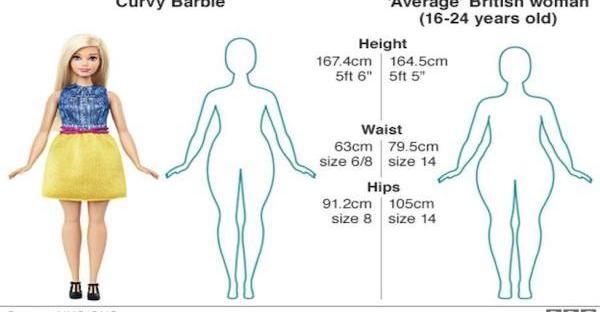
If a girl wants to be a Barbie in real life, she needs to have 5th ft. 5 height, waist size 14, and hips of size 14 too. In the book “Ken and Barbie at LifeSize,” author Kevin Norton states that only about one in 100,000 women match the Barbie body image.

That means that if any female wants to look like Barbie she would be anorexic. Which is an eating disorder characterized by abnormally low body weight, an intense fear of gaining weight, and a distorted perception of weight.

Factors that can create Barbie Doll Syndrome 

1. Exposure to dolls at a young age

Young girls usually play with dolls, they are exposed to beautiful Barbies where they dress them up, do their makeup, and glorify them. Or even exposed to cartoons like Bratz at a young age which creates unrelated beauty standards. Which can lead to lower self-esteem and confidence issues.


2. Role of social media


Millions of females follow their celebrity crush or role models and admire them due to their physical appearance. This idea that I will beautify myself and look like Rapunzel and my prince charming will come and rescue me can lead to bulimia as well. Bulimia includes: eating very large amounts of food in a short time, often in an out-of-control way – this is called binge eating. Making yourself vomit, using laxatives, or doing an extreme amount of exercise after a binge to avoid putting on weight – this is called purging. Fear of putting on weight.


3. Peer Pressure


Most parents want to and send their children to good schools. It consists of all kinds of people. And if by any chance your daughter is in a group of so-called pretty girls according to society’s beauty standards. This might create insecurity, a need for perfection, low self-esteem, and the urge and need for validation, and other issues. 

4. Role of parents, siblings, and relatives


If by any means the child is surrounded by people who often mention words like “moti bachi” or “tumhari beti kali hai” this is a very important factor that the girl might start to dislike herself and not be confident and love herself enough. Which leads her to torture herself by starving herself or doing other unhealthy activities. 


Am I missing out on other factors? Share your take on Barbie doll syndrome and according to you what factors can create this syndrome in the girls?. Till then see you soon. 


Zero Thinking

Hi everybody, how are you feeling? In the previous article, we discussed what is guilt and types of guilt. If you are struggling with guilt then let’s explore what are the underlining causes regarding it and how can we manage it?

 Guilt exists due to the fixed irrational belief that you should have known what might have happened in the future. They believe that you should have known in advance all the negative consequences. And the following thinking pattern that you should have made a different decision.

Since you cannot change the decision you made, you feel trapped can’t find any way out. You may find yourself revisiting the past and

 You may also avoid meeting those whom you believe have been impacted by your decision or those who remind you of the effects of the decisions. Constantly trying to make up for the mistakes you believe you made can place immense stress on emotional wellbeing. You may consider or act out some self-harm attempts as you believe that the damage is irreparable. Or taking drugs or alcohol in an attempt to punish yourself. 

 To heal and manage guilt we need to have the following conversation with ourselves.

  1. To communicate with oneself and understand that we cannot anticipate what, if any, potentially negative consequences might ensue.
  2. You must challenge and change the negative thinking pattern. Thinking that avoiding people, places that remind you of the guilt or self-medicating with drugs or self-harm will not change the irrational belief of guilt you have. It will not change the negative outcome of which occurred due to the decision/s you took. Beating yourself up is not also a waste of time but unhealthy for your mental health. 
  3. Apply the CBT technique which is explained in detail in the previous articles 
  4. “Accepting” and understanding that there is no use of being angry or frustrated with oneself for being able to predict the future. 
  5. Being your authentic self and true to oneself and repeating this to yourself that “I took the decision which best of my intentions”. Moreover repeating that “I cannot control the outcome”. 

 I hope and pray that these small steps help you change the negative, irrational and unhealthy thinking patterns. If you feel that you need professional help, please feel free to reach out to femmerang team.

Guilt

Hi everyone, hope you are doing well. Prayers for my readers who consciously make effort for their healing and well-being. Today we will be exploring another unhealthy negative emotion. This emotion can be very destructive and lead to self-harm as well. This emotion is linked with the emotion we discussed earlier in the articles, that is depression and anxiety. 

This negative emotion is called Guilt. It is wishful thinking that you could turn back the clock to change the outcome of few decisions you made in past. It makes you go through the loop of regret and remorse. What if I tell you that it is possible to release yourself from the guilt and restore your inner sense of peace? To release guilt we need to understand what guilt is and how it is created.

Guilt 

Guilt is an unhealthy negative emotion that carries this belief that something you have done has caused harm and distress to other person or people. It is a cycle of negative thinking in which we are unable to forgive ourselves for some action or behavior. So we beat ourselves up with the feeling of remorse and regret. 

Difference between guilt and shame

We earlier also explored the feeling of shame. People confuse shame with guilt. Shame is an internally felt emotion triggered by the risk of others finding out something about us and judging us negatively. Whereas guilt is more related to the consequences of actions that we have or have not taken and how these have impinged on others. 

Guilt is such a destructive emotion that has led to serious self-harm as the person sees no way out of the crisis of the guilt they have created. 

Let’s explore the top 5 common guilt triggers 

  1. Relationship Guilt: This may include one party having an affair or affairs often unknown to others. Spending too much time at work and not managing time with loved ones. Not visiting or keeping contact with an elderly person or relative who subsequently dies.
  2. Financial Guilt: Due to financial issues it leads us to make extremely poor decisions with disastrous consequences. 
  3. Abuse Guilt: You may feel guilty for not stopping or intervening in a past situation where someone close to you was being abused. 
  4. Accident Guilt: This guilt is a belief that you could have avoided some circumstances where another person was seriously injured or died as a result of an accident or mishap. 
  5. Survivor Guilt: This is common to those who survive an accident along with their family members/friends and they pass away. They feel that they could have died and their loved ones could have been alive. 


In the next article, we will explore how can we manage our emotion of guilt? So stay tuned and stay strong. 


Zero Thinking

Hi brave soul. Why did I call you brave? Well, you are brave because of two reasons. Number one for reading articles on mental health. That shows you want to learn about yourself and grow. And second, you identified and thought about the things you are ashamed of. And that’s beautiful. A good start. 

As promised, let’s dig deep to understand how we can manage the emotions of shame?

Whatever you are ashamed of, you need to understand that IT IS AN IRRATIONAL BELIEF that others will discover something negative about you. And also that you must accept their judgment. 

We all that internal critic making us falsely believe that you are a failure, useless, worthless, etc. When happens in shame you believe that others will apply the same. If you believe that you as a human can be rated at all, the trouble begins. 

Self-Acceptance: We need to understand that as humans we all make and will make mistakes. We need to give ourselves room for improvement. That can only happen when we accept the mistake and focus more on ways to improve and channelize our emotions positively. Being over-critical and saying unhealthy sentences to ourselves is waste of time and energy. Say positive things to yourself and think of what steps can be taken to improve. For example, “I am a failure” can be looked at as “I need to work harder” or “I learned something new”. This exercise helps us to create new healthy patterns and opportunities.

Forgiveness: Self-acceptance cannot take place until we forgive ourselves for the mistakes we made. We need to release the baggage of old self and think of how you want to be? And take baby steps to reach that. Set small targets or goals. Create a journal/diary or write on a whiteboard to keep a track of your progress.

Self-Love: When you follow these steps, self-love takes place. As you take care of your emotional, physical, and spiritual needs self-love comes along. The key to self-love is self-discipline. So daily small habits done repeatedly make all the difference.

It’s time for you to create achievable things to do for the next year. This year love yourself better, which will lead to loving others. Which will lead to doing what makes YOU happy and eventually your light will impact others too. Till then keep shining. See you soon. 


What Is Shame?

Hi everyone hopes you are doing well

Today we will shed light on another negative emotion that we can relate to in some phase of our life. Are you prone to being affected by what others, in your mind, think of you as a person, but you would love to learn otherwise?.

Well, let me tell you that YES it is possible.

For that, we first need to understand this emotion. Let me introduce you to the shadowy word SHAME!

What is Shame?

Shame is a deeply felt, painful experience that is socially driven. It’s a feeling in which we believe that we are perceived by others as being unworthy of their respect. This is possible because due to the actions we have personally or as a group taken. Or shame is also a feeling in which we hold ourselves accountable for any internal code we have broken and we judge ourselves or become too critical and hard on ourselves. This is sometimes called internal shame. 

It’s a natural progression to move from depression to shame. Because it’s linked with an irrational belief that I can be measured, rated, or judged by others. 

We are social creatures and we all want and like to be part of a group that accepts us. Therefore we don’t want anyone to find out something unpleasant about us or a situation related to us. 

Let’s find out 

a few causes of shame:

  1. If you have been brought up in a socially deprived area, criminal family history, or domestic or family violence. 
  2. You may be ashamed of your body. Ashamed what others will think about your appearance.
  3. You may find yourself in debt, bad financial standing, ashamed of your financial decisions. And hiding from your partner, family, friends, etc.
  4. You might be a victim of social media trolling or shaming.
  5. You may be a victim of sexual abuse, sexual assault, rape, domestic abuse, or violence.
  6. You may be a couple with infertility issues. 
  7. You may be struggling with loneliness. And not found your partner and ashamed what others will think that why I am not married. 
  8. You may be struggling with mental health problems like OCD, depression. Bipolar etc.
  9. You may be suffering from social anxiety. What others will think if I mess up the presentation etc.
  10. You may be struggling with a hidden addiction to alcohol, drugs, etc.

These were just a few of the experiences people are ashamed of. Please write to us and share if you are brave enough to let out what you are ashamed of? As in the next article, we will explore how we can manage our emotions of shame. Till then stay strong. 


Special Edition

Hi everyone, how are my strong and resilient followers doing? Hope you are doing well. And if you are not, it’s okay. It’s completely fine. And if no one has said it to you, you should know that I am super proud of you. I am, genuinely! 

Can you believe that we are finally entering the last month of 2020? This month has been super crazy no? We all have experienced the news of death, to the news of the birth of a newborn baby. To the news of separation to the news of corona weddings, to the news of people starting their own business to the news of how belongings of people were damaged in the rain. To the people of all age groups enjoying the rain to experiencing the damaged roads in the city. We all had different struggles but this year was all about taking good with bad. It was all about learning how to balance. 

In previous articles, we discussed emotions, understood what is self-healing to understanding different types of negative emotions. We dived deep into anxiety and its types, to panic attacks, phobias and its type to cognitive distortions to depression and learning about CBT and how to apply it. You have come so far! Did you take a moment to appreciate yourself? Did you pause for a moment and gave credit to yourself how far you have come? If not so please do it right now! As we will not proceed. 

Here are the following sentences you have to say to yourself ATLEAST three times before we discuss other negative emotions.

  1. I am healing
  2. I will let go of all the ill feelings
  3. I will rise
  4. I am enough 
  5. I choose myself
  6. I believe in myself 
  7. I will not give up on myself
  8. I am consistent in developing healthy habits  
  9. Self-discipline is self-love

SAY IT LIKE YOU MEAN IT!

This is your first step towards self-love. Make a habit to say these words to yourself every time you get up. Okay?

Lots of love and prayers for you, keep swimming as in the next article we will touch on a little heavy and difficult negative emotion. And what is that? For that, you need to read the next article.